

Trouble Staying Awake During the Day
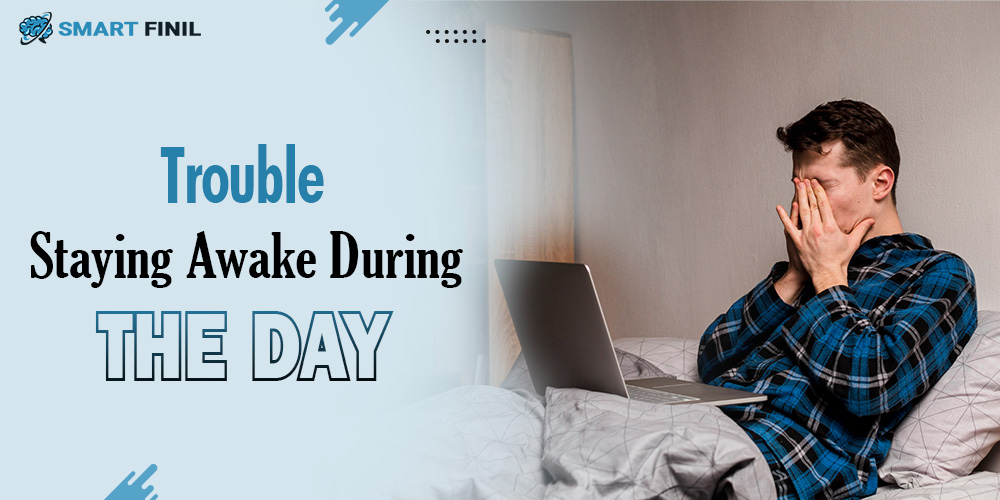
Why Am I Having Trouble Staying Awake During the Day?
If you are feeling sleepy during the daytime, then this can be due to your body’s need for sleep exceeding your ability to remain alert. This may happen after several nights of insufficient sleep and could be due to inconsistent bedtime or repeated interruptions during the night.
Since your body’s internal clock (which is known as the circadian rhythm) also influences alertness. Even though most of the people experience a natural dip in energy during the early afternoon, even after a good night’s sleep. It is advisable to pay attention to why you are sleepy all day—either after lunch or the entire working day/performing daily routines.
How Much Daytime Sleepiness Is Normal?
If you are feeling lighter at certain times of the day, it is quite common. But here, the most important question is whether the sleepiness interferes with your daily activities or makes it difficult to stay awake when necessary.
Most of the adults require 7-9 hours of sleep every night. But with some, even taking sufficient sleep can, the quality of sleep matters because of frequent awakening or breathing interruptions (this can prevent the body from getting restorative sleep).
However, occasional drowsiness may also be part of your normal sleep-wake rhythm. Apart from this—
Repeatedly sleepy Awake During meetings
Struggling to keep your eyes open
Needing frequent sleep (may also suggest excessive daytime tiredness).
What Causes Daytime Sleepiness?
Different factors contribute to daytime drowsiness, like
Insufficient sleep
Regularly sleeping for fewer hours than your body needs can also create a sleep debt that builds over several days.
Poor quality of sleep
There can be frequent awakening, discomfort, noise, or also breathing problems that can interrupt the restorative sleep.
Circadian rhythm disruption
There can be late-night screen use, shift work, jet lag, and inconsistent sleep that can make it difficult to feel alert at nighttime.
Stress
The continuous stress can even interfere with your sleep routine, thereby making you feel stressed.
Medical factors
There can be Iron deficiency, anemia, thyroid problems, and other conditions that can contribute to tiredness or reduced alertness.
Sleep disorders
Some sleep disorders, like obstructive sleep apnea, narcolepsy, and idiopathic hypersomnia, can even contribute to persistent sleepiness despite adequate time in bed.
How Poor Sleep Affects Your Day
Proper sleep can support attention and concentration; there can be physical recovery. But when there is no sleep or taking too short, then all of these functions become less effective. If you overlook this condition, then this can reduce your awareness, making you impaired.
You might feel like you are functioning properly while making some mistakes, reacting more slowly, and even struggling to process the desired information.
You can feel more frustrated, your decision-making ability becomes less or your motivation can decline.
Over time insufficient sleep can develop a cycle where daytime tiredness leads to—
- more caffeine consumption
- late-evening alertness
- delayed bedtime
- and even greater sleep disruption.
- Hence, it is advisable to focus on getting daytime alertness, with proper care and measures.
Lifestyle Habits That Can Make You Sleepy
Irregular sleeping schedule
If you are going to bed and waking up at significantly different times, then there can be disruption to your internal body clock.
Intake of excessive caffeine
Caffeine can temporarily improve your alertness, but if you consume it late, then it can make it harder to sleep. This can lead to next-day sleepiness and further caffeine use.
Heavy meals
Consuming large or heavy meals can leave you feeling sluggish, especially when combined with your natural afternoon dip in alertness.
Prolonged sitting
Longer periods of inactivity can make you feel less alert. There should be short movement breaks; stretching or brief Awake can help.
Insufficient daytime exposure
Light is one of the important signals for the circadian rhythm. When there is limited daytime exposure to light (in the morning), this may contribute to a poorly aligned sleep-wake schedule.
Health Conditions Linked to Daytime Sleepiness
Persistent daytime sleepiness can sometimes be associated with underlying health conditions—
- Obstructive sleep apnea
- Iron deficiency or anemia
- Depression
- Thyroid disorder
- Narcolepsy
- Restless legs syndrome
- Idiopathic hypersomnia
How Daytime Sleepiness Affects Daily Life
- If you feel sleepy during the daytime, then it can impact your performance, relationships, physical safety, and overall quality of life.
- At work or school, reduced alertness can make it harder to retain information or complete tasks.
- Sleepiness can also affect your reaction time and decision-making (Awake) during driving, operating machinery, cooking over an open flame and performing other activities.
- Some of the people even withdraw from social activities because they feel too tired to participate.
Simple Ways to Stay More Alert During the Day
Consistent sleep schedule
Must try to go to bed and wake up at the same time. Most of the adults should also aim to gain 7-9 hours of sleep.
Get morning light.
Spending some time outdoors can also regulate the body’s internal clock and support more consistent sleep.
Short movement breaks
Try to stand up, stretch, and even take a brief walk after extended periods of sitting.
Get a better sleep environment.
Must keep your bedroom dark and quite. It is, moreover, advisable to reduce stimulating activities before bed and even address recurring problems.
Apart from these ways, taking help of waklert 150 can also help to improve your daytime alertness by helping to contribute to your day-to-day activities.
When Should You Be Concerned About Daytime Sleepiness?
When you are feeling sleepy most of the time every day despite taking a powerful nap.
When you snore loudly.
Facing difficulty Awake up or remaining unfreshened after a long period of sleep.
When you are finding that your daytime sleepiness is affecting your work, relationships, or ability to function safely.
When you are concerned about protecting your sleepiness, then reach Smartfinil, as we, being an online pharmacy, can deliver different medicines. These are the drugs that can promote wakefulness and help in giving you complete attention and concentration.
We help in delivery across countries.
Our prices are affordable.
How Is Excessive Daytime Sleepiness Diagnosed?
A healthcare expert can examine your—
- sleep history
- monitoring sleep diary
- physical examination and blood tests
- sleep studies
Can Daytime Sleepiness Be Prevented?
There are many episodes of daytime sleepiness that can be reduced by maintaining a consistent sleep schedule.
It is advisable to track your sleep and daytime energy for several days.
if your sleepiness continues despite getting sufficient or regular sleep, then it is advisable to consult a doctor.
Prevention also includes recognizing factors you cannot correct through lifestyle changes alone.
Daytime sleepiness can be controlled by examining these factors and also taking the medication Artvigil 150. As this particular drug works as a wakefulness-promoting agent. Once consumed, it can help to promote alertness and develop concentration.
FAQs
How can I stop feeling sleepy during the day?
It is advisable to aim for 7-9 hours of sleep, thereby maintaining consistent sleeping time and wakening time. Additionally, take morning light and movement breaks for betterment.
Why do I get sleepy after lunch?
Feeling sleepy after lunch reflects your body’s natural early-afternoon dip in alertness, your sleep, meal size, quality, and other lifestyle factors. If this is happening on a frequent basis, then consult a doctor.
Can stress cause daytime sleepiness?
Yes, stress can also be the one major factor interfering with your sleeping. It may further also contribute to fatigue and difficulty in concentrating.
Can poor sleep make you sleepy during the day?
Yes, if you take little sleep or frequent awakenings, then this can impair attention, reaction time, and also alertness. Improving sleep duration and quality may help.
When should I see a doctor about daytime sleepiness?
If you regularly face struggles during the daytime, then it is advisable to consult a doctor. People can experience symptoms like loud snoring and gasping during sleep; then it is advisable to seek consultation.