

What type of snoring is dangerous?
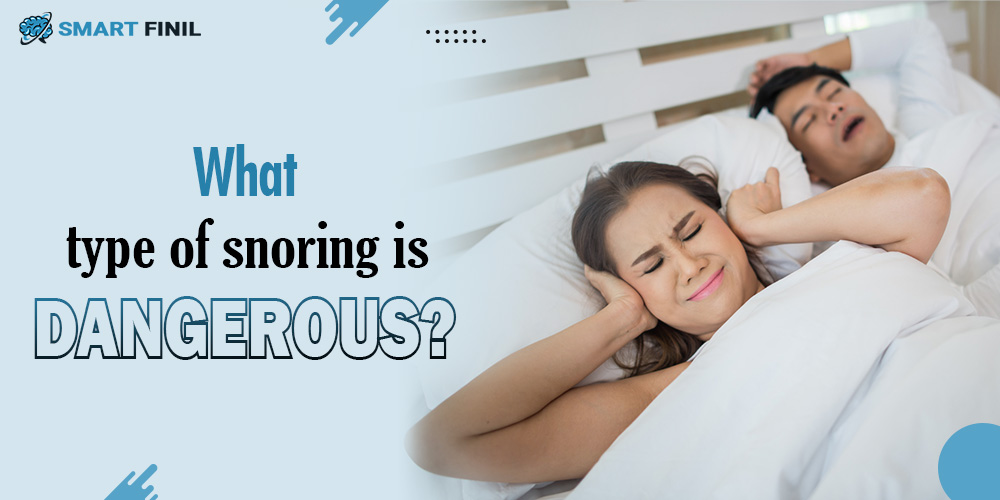
Snoring is common, and in most cases, it is harmless as well. Few kind of snoring indicate breathing problems straining the heart, and causes disruption of sleep and increases the risks for accident risks. Dangerous snoring needs early diagnosis and treatment before it gets worse.
Is Snoring Always Dangerous?
No. It is a common phenomenon and takes place when the relaxed throat tissues tend to vibrate with the passing of the air through a narrow airway. Alcohol, allergies, colds, sleeping on your back, and weight can trigger snoring. Mild, occasional snoring that doesn’t leave you tired is called benign.
Snoring may become a concern when accompanied by certain symptoms. Particularly interruptions in breathing and daytime fatigue. The Academy of Sleep Medicine (AASM) suggests that evaluation is important when snoring is paired with such signs.
What Type of Snoring Is Dangerous?
Frequent and loud snoring
If the snoring is loud enough that it can be heard from closed doors, it is a risk factor culminating in obstructive sleep apnea (OSA). Volume will not confirm loud snoring every night as a disorder but the habitual form of snoring surely deserves attention, and most importantly, with patients that are overweight, have a larger neck circumference, and have high BP.
Snoring With Breathing Pauses
If the partner notices that you have stopped breathing for a few seconds and resumes with a loud snort and gasp, it may be a sign that the airways have collapsed more than once in a night.
Gasping, Choking, or Snorting During Sleep
If you wake suddenly with snoring and gasping and a choking sensation, it may be a classic sign of obstruction in the airways. Each of the events can lower the blood oxygen, causing the sleep to fragment. This may be common in individuals who don’t even remember waking.
Snoring With Excessive Daytime Sleepiness
If you have been struggling to stay awake even while driving, have been nodding off in meetings, and still feel the exhaustion even after sleeping for eight hours, you may not be getting restorative sleep. Your sleep quality is the issue. Drowsiness is one of the most severe short-term risks related to untreated sleep apnea. Night Shift with no Sleep is also worsened.
Waking Up With a Dry Mouth or Morning Headache
Mouth breathing problems are a result of a sore throat and dry mouth. Morning headaches that have a dull pain on both sides of your head may develop due to low oxygen levels and raised carbon dioxide during sleep. A few other signs that may be related to the cause may include nighttime sweats, frequent urination during the night, concentration problems, changes in mood, and reduction in libido.
Is Dangerous Snoring a Sign of Sleep Apnea?
Yes. Dangerous snoring may mean obstructive sleep apnea, which is sharply associated with sleep apnea. It affects more than billions of adults across the world, being a common cause of distress for patients, with most individuals remaining completely undiagnosed.
Severity in individuals is measured by the apnea-hypopnea index (AHI) and also the number of disruptions in breathing every hour of sleep.
AHI and severity
Under 5: Normal
5-15: Mild
15-30: Moderate
Over 30: Severe
Risk factors include excess weight gain, large circumference of neck, male sex, age over 40, enlarged tonsils, narrow airways, sedative use, alcohol, nasal obstruction, and family history.
Why it matters? An untreated form of OSA is related to hypertension, cardiac rhythm problems, atrial fibrillation, stroke, cardiac failure, depression, type 2 diabetes, and higher risks of road accidents.
OSA and sleep disorders like Narcolepsy and shift work can be treated with armodafinil medicines like Waklert 150 available at Smartfinil, where you get the best sleep medications at affordable rates.
When Should You See a Doctor About Snoring?
You must try to book an appointment with your physician if you have been struggling with snoring problems accompanied by any of these:
- Breathing pauses
- Choking and gasping at night
- Daytime sleepiness
- High blood pressure
- Morning headache
- Concentration problems
- Snoring of child
- Snoring during pregnancy
What to expect at the visit: The doctor will evaluate your symptoms and examine your mouth, nose, and throat. A physician might recommend sleep study. You may also be suggested medicines like Artvigil 150 for improvement of wakefulness in adults so you can manage excessive sleepiness problems.
How Can You Reduce Snoring?
Treatment options may vary as per the severity as well as the snoring cause. Options may include CPAP (continuous positive airway pressure), oral appliances, positional therapy, weight management techniques, GLP-1-based weight-loss medication, etc.
Snoring can be reduced by doing the following:
- Lose excess weight
- Avoid alcohol and sedatives 3-4 hours before bed.
- Sleep on sides
- Treat nasal congestion
- Quit smoking
- Maintain a consistent sleep schedule of 7-9 hours.
- Raise the head in case of reflux
- An oral appliance must be suggested by a qualified dentist.
Anti-snoring gadgets may silence the noise but will not result in the final treatment of snoring and sleep apnea. You may use sleep medicines like modafinil, and if you are wondering Does modafinil affect libido? Yes, it may, with increasing dopamine.
When Is Snoring an Emergency?
You must seek medical help if your sleep-related problems and snoring are accompanied by:
- Improper heartbeat, racing, chest pain
- Sudden severe headache, weakness, facial drooping, slurred speech
- Gray and blue lips and face
- Breathing problems
- Falling asleep all of a sudden in risky places
- A child struggling with pauses in breathing, blue lips, and chest retractions
FAQs
What type of snoring is dangerous?
If the snoring is loud and is accompanied by breathing pauses, choking, and gasping, or daytime sleepiness in excess, it may indicate obstructive sleep apnea and may call for a medical evaluation.
How do I know if my snoring is sleep apnea?
Without testing, you cannot be sure whether it is sleep apnea. Strong indicators include waking up gasping, breathing pauses, morning headache, and unrefreshing sleep, as well as daytime drowsiness.
Is loud snoring every night normal?
Loud snoring every night may be common, but it may not always be harmless. If you are snoring each time with a loud noise, the condition certainly deserves a check-up. It may indicate sleep apnea and some other problem related to the airways.
Why do I snore and stop breathing?
In case of OSA, throat muscles tend to relax with the collapsing of the airways, and it also blocks the airflows. The oxygen level tends to drop till the brain briefly wakes up to reopen the airways. It produces a snort and gasp followed by silence. In a few cases, central sleep apnea may also be caused by faulty breathing signals produced by the brain.
Can snoring cause excessive daytime sleepiness?
Snoring will lead to sleep disruptions. Repeated episodes of waking up may prevent deep sleep and restorative sleep, leading to daytime fatigue, irritability, and poor concentration. There are different kinds of disorders, such as narcolepsy, hypersomnia, and night shift, that can lead to daytime sleepiness; hence, proper evaluation may matter.
Should I see a doctor for loud snoring?
A doctor visit becomes mandatory if the problem of loud snoring continues for most of the nights and may arrive with certain warning signs. Early treatment and diagnosis may cause reduction of cardiovascular concerns, improve mood and energy, and boost safety factors.