

No products in the cart.

Paradoxical insomnia: Why You Can’t Sleep
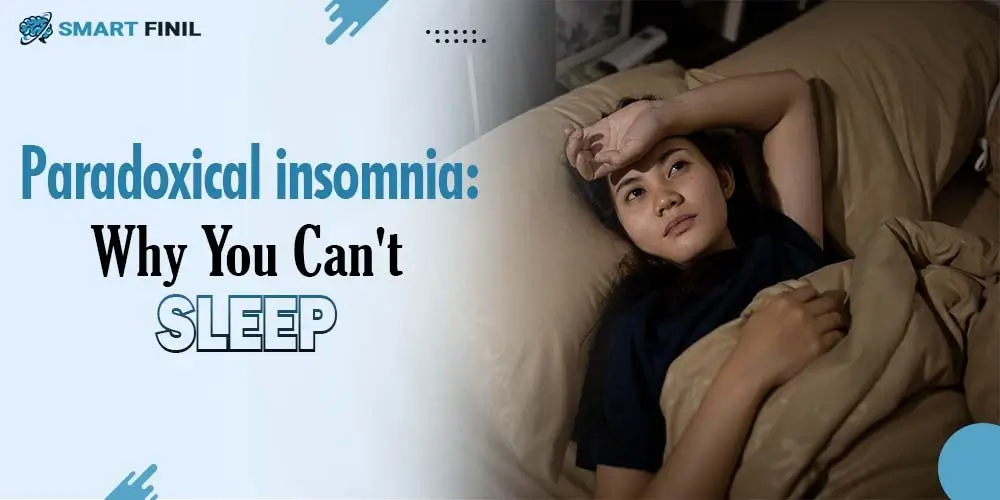
Understanding Paradoxical Insomnia
Paradoxical insomnia is a highly specific state of sleep in which people believe that they are awake during the night or most of the nights, but when the condition is looked at by a professional, it is actually seen that they are sleeping during the right time. This kind of difference between reality and perception can be the most irritating and frustrating.
The experience has been characterized by many people as “I can’t sleep at night” when objective sleep studies indicated otherwise. It has also been referred to as the “sleep state misperception,” whereby there exists a discrepancy between the experience of sleep and the real sleep.
It is not just a poor sleeping habit disorder. Rather, it is a cognitive and neurological disconnection that is capable of causing a greater fear of sleep. Over time, this panic might reinforce the belief about being sleep-deprived, and a vicious circle is created that is difficult to break without some kind of intervention.
Differences with other sleeping disorders
Paradoxical insomnia is quite different from other forms of sleep insomnia, whereby individuals experience the fact that they lack sufficient sleep or, in fact, have disrupted sleep. In the case of common situations, the issues that can be measured are the inability to sleep, frequent waking, or reduced duration of sleep. In paradoxical insomnia, though, the sleeping pattern can appear to be normal when it is observed within the clinical setup.
The condition is sometimes grouped under larger categories like sleeping disorders insomnia, however, the misperception of sleep is the characteristic of the condition. Because of this, the traditional diagnosis procedures, in which they rely only on the reports by patients, may not be able to provide the full picture. Subjective experiences and objective testing should be combined to diagnose and manage it correctly.
Paradoxical Insomnia vs Insomnia
Some clinical differences emerge due to the comparison of paradoxical insomnia vs insomnia. The classic concept of insomnia is the actual inability of a person to fall asleep or stay asleep, and in the majority of cases, it leads to fatigue and ineffective performance during the day. In paradoxical insomnia, however, individuals can complain that they can’t sleep, yet they are quite alert during the day.
This interpretation is that it is not the quantity of sleep that is the issue, but the perception of it. The brain can be highly alert during the time when one is sleeping and thus may make people feel awake. This distinction should be known to be able to employ the right intervention methods because the intervention that works well in conventional insomnia may not necessarily work well in paradoxical cases.
Symptoms and Red flags
The subjectivity of the condition may be a problem since it is hard to determine paradoxical insomnia symptoms. The primary complaints include long sleeplessness and the impression that they never sleep and that they wake up at regular intervals throughout the night. Irrespective of these reports, people might not exhibit the common symptoms of sleep deprivation.
The other typical experience is the constant feeling that one can’t fall asleep despite hours in bed. This impression may add to the further stress and preoccupation with sleep, and it brings the problem to even greater heights. In other cases, some individuals may get anxious at nighttime, and that keeps them thinking that they are not asleep.
Behavioral and Psychological Influences.
In paradoxical insomnia, the key elements are psychological. The distorted perceptions of sleep may be caused by stress, anxiety, and increased self-awareness. Individuals are also too sensitive to their body sensations, and they view the normal alterations of sleep as a wake-up call.
Numerous individuals affected by this condition complain that they are unable to sleep because of the thoughts that run through their minds, or they cannot relax. The bed could also be associated with frustration rather than sleep in the long run. Such behavioral patterns as sleeping irregularities, excessive time at a screen before sleep, and stimulants could exacerbate the problem. These factors are one of the components of successful treatment.
Health Effects and Implications on Daily Life
Even though paradoxical insomnia does not necessarily imply the fact of sleep deprivation, the perceived deprivation of rest may be quite severe. Fatigue, lack of concentration and mood disturbance are the broken sleep every night side effects that has been reported. These impacts can have influences on the work performance, work relations, and quality of life overall.
The pressure of being unable to sleep is also a possible cause of mental illnesses like anxiety and depression. This can eventually be developed into a feedback loop where psychological distress will make sleep perception poor and vice versa. This is a cycle that needs to be stopped with a multifaceted approach comprising mental and physical well-being.
Therapy and Lifestyle Interventions.
Cognitive and behavioral therapy is often used in paradoxical insomnia treatment. The Cognitive Behavioral Therapy of Insomnia (CBT-I) is considered to be a first-line treatment. The therapy assists them in rethinking negative beliefs regarding sleep and adopting better sleep patterns.
Changes in lifestyle are also very important. Sleep perception can be enhanced by developing a regular sleeping schedule, developing a calming pre-sleep routine, and reducing screens before sleep. Deep breathing, meditation, and progressive muscle relaxation are relaxation methods that could help to alleviate anxiety and bring a feeling of relaxation.
The other significant aspect of treatment is education. Knowing how to fall asleep or how to differentiate between reality and perception can enable individuals to regain trust in their ability to sleep.
Drugs and Medical Assistance
To a certain degree, the administration of paradoxical insomnia medication can be regarded as part of a broader treatment approach. Healthcare providers can prescribe short-term sleeping medications, such as a Zopiclone tablet, to normalize sleep patterns. It may as well be administered under medical advice, along with other substitutes like nappie 7.5mg.
There are other instances of wakefulness-stimulating medications like Smartfinil, particularly when daytime performance is impaired. But paradoxical insomnia is not normally the main problem that can be resolved by medication.
The pharmacological therapies are not to be used in the long run due to dependency and side effects. Rather, drugs are normally administered as an interim until the behavioral therapies take care of the causal factors.
When to go for medical Aid
It is also relevant to understand when professional help is needed when it comes to paradoxical insomnia. When the chronic experience in can’t sleep at night starts to disrupt normal life, then it would be good to visit a sleep specialist. A thorough analysis can involve sleep tests, psychological tests, and interviews to find out the nature of the condition.
Early diagnosis and intervention can play a significant role to play. Education, support, and therapy, together with the issues of paradoxical insomnia, could be overcome, and the problems of a more normal relationship with sleep would be built.
